What do you do when your life gets turned upside down? And what do you do when the upside-down makes the right side up seem unappealing?
That’s the question I’ve been trying to answer since I had a stroke a year and a half ago. Before my stroke, I was living the life that was expected of me. I had a degree from a prestigious university. I was in my second corporate job. I was living in New York City. I was the image of you prototypical successful early-20s postgrad who was lost in the shuffle but who was surely on the right track, right? Maybe. Maybe not.
Life-altering events have a way of forcing you to pause and reflect on the direction you were headed in. As I’ve been figuring out how to move forward, a question I’ve been continually grappling with is: how can you know what you truly want when you’ve never had the chance to pause and figure it out? Before my stroke, I was standing on the never-ending escalator of life, and it would have been unthinkable to me to get off of that escalator. But then I was forced off of it.
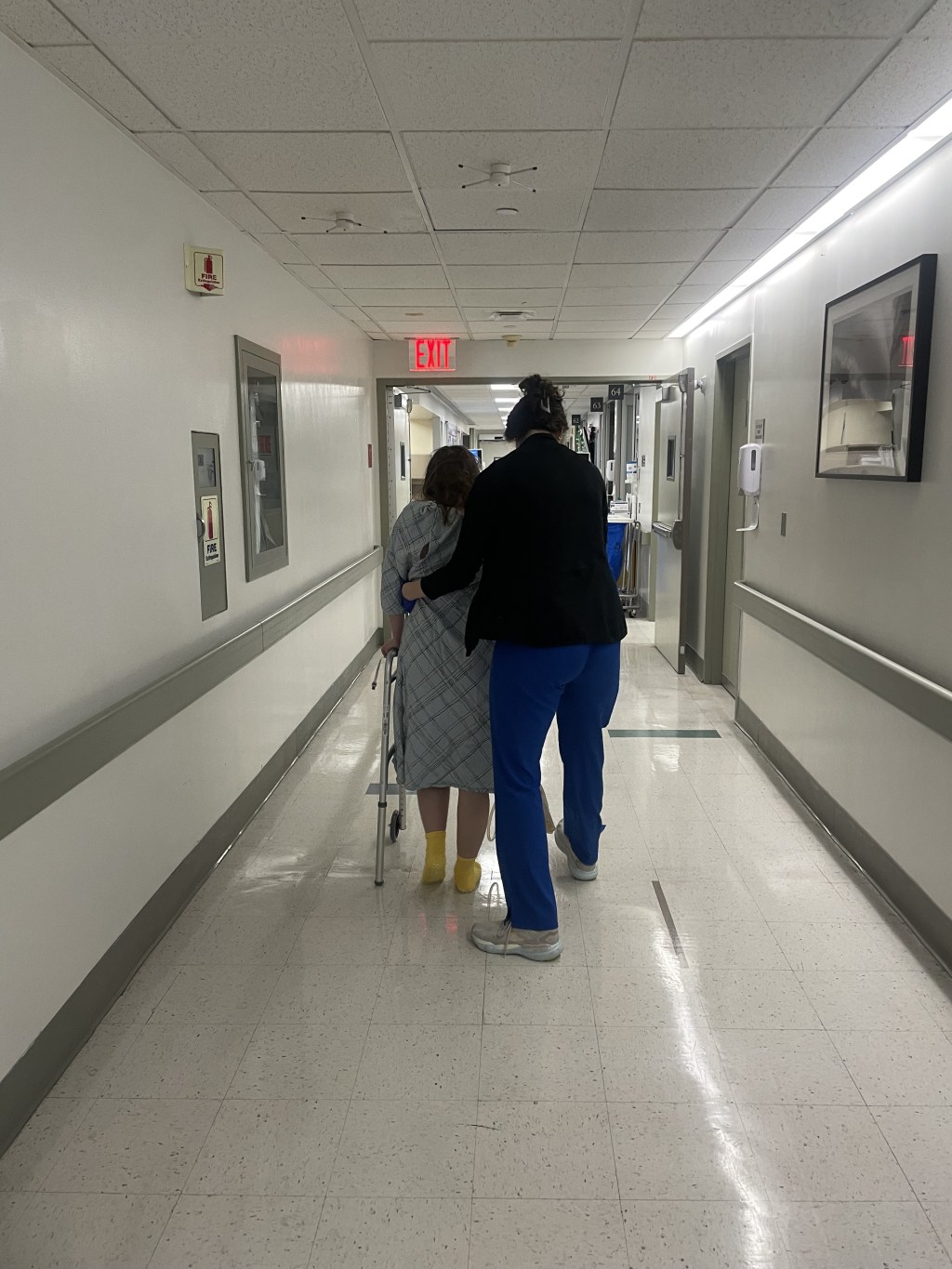
When you are stuck in a hospital bed for weeks, and then your childhood bed for months, there is not much to do except reflect. And sleep. Lots and lots of sleep.
As I reflected on my “pre-stroke life,” as I’ve begun to call it, I realized I didn’t know what I wanted anymore. When you have a stroke, so many decisions are made for you. I’ve heard people say that having a stroke is like becoming a child again, and I would have to agree. It’s sleeping for 18 hours a day, it’s having your mom brush your hair, it’s having your dad tuck you into bed with a stuffed animal at night, it’s suddenly having your parents’ undivided attention 24/7, it’s being unable to care for yourself. But it’s also re-experiencing adolescence. It’s questioning your purpose. It’s reflecting on whether you even want to go back to the life you were living before. It’s suddenly growing up and regressing all at once. It’s realizing that while the life you had before may have been perfect on paper, it isn’t the life you want to continue living.
When everything I did was suddenly an active choice and not automatic, I realized that maybe those hadn’t been my true choices after all. Before my stroke, it was automatic to log into work each morning, try my hardest, and go through a long checklist of tasks. But when just walking around the corner to grab a coffee left me exhausted for hours, every minor decision had to be intentional. What is worth my energy? Who do I want to be? How do I want to spend my time? At this point in my stroke recovery, I could probably physically manage to hold a full-time corporate job again. But now that I see my energy as a finite resource, I realize that it’s not how I want to choose to spend my time. It no longer feels like the easy and automatic choice that it once did.
So, what does the upside-down look like? It looks like moving across the world to live with your parents. It looks like waking up each morning not knowing what the day has in store. It looks like retaking high school classes so that I can redo my bachelor’s degree and have a career that actually suits my lifestyle. It looks like accepting that life is not a race, that even if I don’t complete my degree until my mid-30s, I have a whole life ahead of me. It’s applying for part-time customer service jobs and seeing it as a stepping stone to where I want to be, not as a step back or a demotion.
The hard thing isn’t always knowing what to do. Sometimes, it’s allowing yourself to be unsure. Life in the in-between can get tiresome too, especially when you watch your friends get new jobs and promotions, graduate with new degrees, and reach the shiny new destinations you thought you would be reaching alongside them.
But life in the in-between has also forced me to unlearn a lot of what I previously believed. I am not invincible, no matter how young or seemingly healthy I am. There is no perfect path I can choose that will guarantee that everything works out, because even the plans I was certain about can disappear overnight.
When I catch myself comparing my life to someone else’s, or obsessing over a minor decision that has somehow started to feel monumental, I pause and think to myself, “If I were to have another stroke tomorrow, what would I do about this?” My answer usually tells me everything I need to know. I’d call my mom, I’d lean on my friends, I’d ask for help. I’d take the responsibility that felt urgent five minutes ago and remove it from my plate. The bills that need to be paid are put on auto-pay. That job that I “needed” to apply for can wait until my mind is clear again. The things that truly matter, the things that I want, they will still be there when I am ready. So many of the things that feel urgent aren’t, and so many of the things that are important don’t feel urgent at all.
I recently dropped a high-school (Komvux for my Swedish people!) class because it was causing me unnecessary stress. In doing so, I may have delayed my university start date an additional six months. This would have been unthinkable to me two years ago, but now I know that school will be there when I’m ready.
The hardest part is figuring out where to go from here. I know I don’t want to remain in limbo forever, but I also know I don’t want to return to the life I had before. For a while, I expected there to be some big moment when the answer would become obvious. But that moment hasn’t come.
Instead, moving forward is just one small decision at a time. It’s going to that book club, agreeing to that date, signing up for that class. It’s writing something and letting other people read it. And slowly, a life starts to form around those decisions.
I still don’t know exactly what that life will look like. I’m planning to go back to school so that I can eventually help people navigate serious illness or disability. I’ve been taking classes and meeting new people. I’ve started writing and posting on TikTok. I’m trying things because I want to try them, not because they fit neatly into the version of my life that I once thought I was supposed to have.
I used to think that pausing meant falling behind. But then the world forced me into an involuntary pause, and somehow, it kept spinning. So maybe the world can handle my voluntary pauses, too.
Right now, I’m trying to build my life around the things that have remained important even as my life was put on pause: my health, the people I love, and the community I’m building.
A year and a half ago, my life was turned upside down. And rather than trying to turn it right side up again, I’ve stopped treating my discomfort with the in-between as evidence that I’m doing something wrong. Instead, I’m seeing it as an opportunity to make radical positive changes to my life that I didn’t think were possible before my stroke.
 Young Stroke Survivor
Leave a comment